

December 21, 2025
On December 16, 2025, the United States ordered a “total and complete blockade” of sanctioned oil tankers entering and leaving Venezuela. What does this mean for Venezuela and the global oil industry? Would it cause an oil shortage on world markets? How would it affect Venezuela’s revenues, and what could happen next?
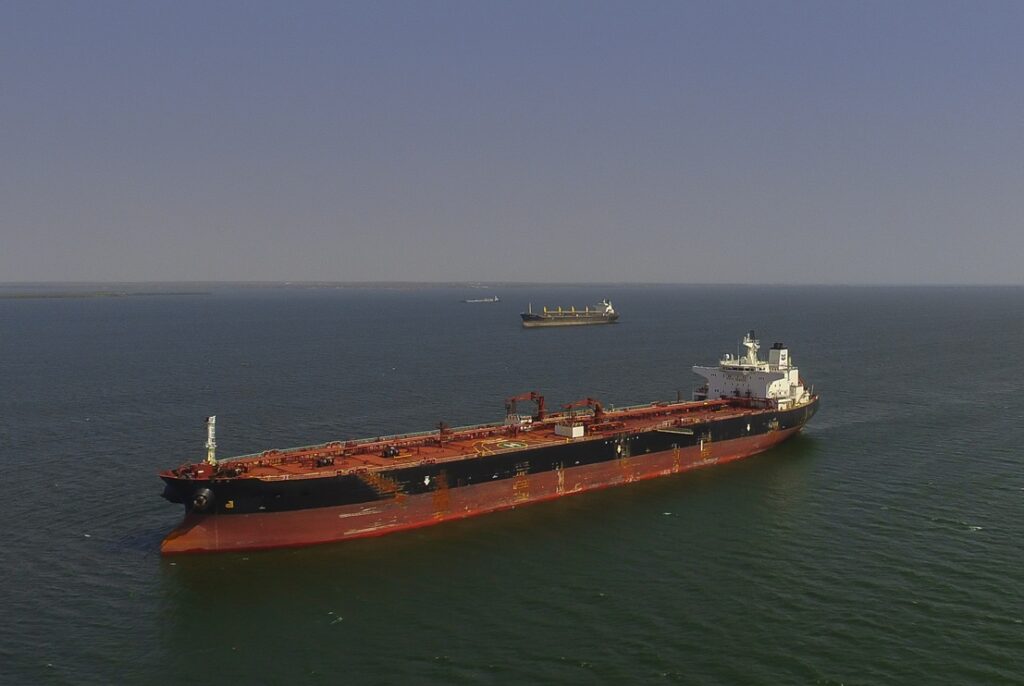
Oil Tanker near Venezuelan Coast. Credit: iStockPhoto
How Much Oil Will Be Affected by the Blockade?
On December 16, 2025, the United States ordered a “total and complete blockade” of sanctioned oil tankers entering and leaving Venezuela. Venezuela described the move as “a reckless and serious threat” to its sovereignty and national interests.
Venezuela exported over 780,000 barrels of oil per day in October of this year. Of this amount, Chevron produces and exports about 100,000 barrels per day, a volume that could potentially be excluded from sanctions. Of October’s total exports, only about 100,000 barrels per day went to the United States, while the rest went directly or indirectly to China.
However, only roughly 40% of the oil tankers entering and leaving Venezuela are sanctioned. The exact amount of oil that Venezuela would be unable to export due to the blockade is difficult to estimate, but perhaps less than 350,000 barrels per day could, in theory, be removed from global markets. World oil prices were not significantly affected by the announcement of the blockade, indicating that markets do not consider such a reduction in supply to be significant.
What Is the Impact on Venezuela?
The impact of the blockade on Venezuela’s economy could be substantial. Traditionally, military and other elites in Venezuela, Iran, and Russia receive significant benefits stemming directly from the oil trade. These benefits help ensure regime stability. In Venezuela, these individuals are known as los enchufados, which literally means “the plugged-in ones.” Their privileges are unlikely to be reduced even in the event of a drop in oil revenues.
Nevertheless, total revenue flowing into the Venezuelan economy will almost certainly decline. This does not necessarily mean that economic hardship will lead to regime change. In 2020, under heavy sanctions, Venezuela produced just over 500,000 barrels of oil per day, and the regime survived despite the severe burden placed on the population.
What Is the Impact on the “Shadow Fleet”?
Venezuela, Iran, and Russia rely on the so-called “shadow fleet” to transport oil worldwide. This is a large fleet that includes aging tankers with opaque ownership structures. These operations involve frequent changes of flags of convenience, ship-to-ship transfers, and weak or fictitious insurance. Operators also attempt to conceal the origin and destination of oil using various methods.
Estimates of the size of the shadow fleet vary. According to some reports, the number of shadow fleet vessels exceeds 1,000 out of approximately 7,500 oil tankers worldwide. In December 2023, the analytical firm Vortexa estimated that 1,649 vessels had operated in opaque markets since January 2021, including 1,089 tankers transporting Russian crude.
In theory, it is possible to block shadow tankers from territorial waters or exclusive economic zones, but in practice this is largely unfeasible. Targeting such vessels is difficult; therefore, sanctioning individual tankers has not completely halted oil exports from Venezuela, Iran, and Russia. However, according to Incorrys estimates, these measures have increased the full-cycle cost of oil from sanctioned countries. Operating the shadow fleet requires additional expenditure across the supply chain, including higher tanker rental costs, payments to multiple intermediaries, and efforts to conceal tanker operations. These added costs reduce profits from oil exports in Venezuela, Iran, and Russia.
Based on this assessment, sanctioning the shadow fleet has measurable benefits, even if its operations cannot be completely stopped. The U.S. blockade of such oil tankers suggests that Washington may be taking a more serious approach to addressing the shadow fleet problem.
What Is Next?
The effectiveness of oil sanctions depends largely on how they are implemented. On December 19, 2025, ship-tracking data showed that a sanctioned oil tanker entered Venezuelan waters. It remains unclear why this occurred and whether the tanker will continue to defy the blockade.
Although the blockade is unlikely to affect the stability of the Venezuelan regime, it will likely exacerbate economic hardship in the country. Shadow fleet operations worldwide may be partially disrupted, leading to an increase in the full-cycle costs of Russian and Iranian oil exports.
References:
Maher, Kit, Liptak, Kevin. “Trump orders ‘total and complete blockade’ of sanctioned oil tankers coming to and leaving Venezuela.”, CNN, 16 December 2025, https://www.cnn.com/2025/12/16/politics/blockade-venezuela-sanctioned-oil-tankers
“What Trump’s Venezuela oil blockade means for Maduro and the world.”, Atlantic Council, 17 December 2025, https://www.atlanticcouncil.org/dispatches/what-trumps-venezuela-oil-blockade-means-for-maduro-and-the-world/
“The Global Oil Tanker Market: An Overview as It Relates to Sanctions.”, Congressional Research Service, 18 March 2024, https://www.congress.gov/crs-product/R47962
Rios, Michael. “Sanctioned tanker enters Venezuelan waters, tracking data shows, testing Trump’s blockade.”, CNN, 19 December 2025, https://www.cnn.com/2025/12/19/americas/sanctioned-tanker-venezuela-intl-latam.