

January 12, 2026
Bottlenecks for the Venezuelan Oil Industry – Diluent and Steam
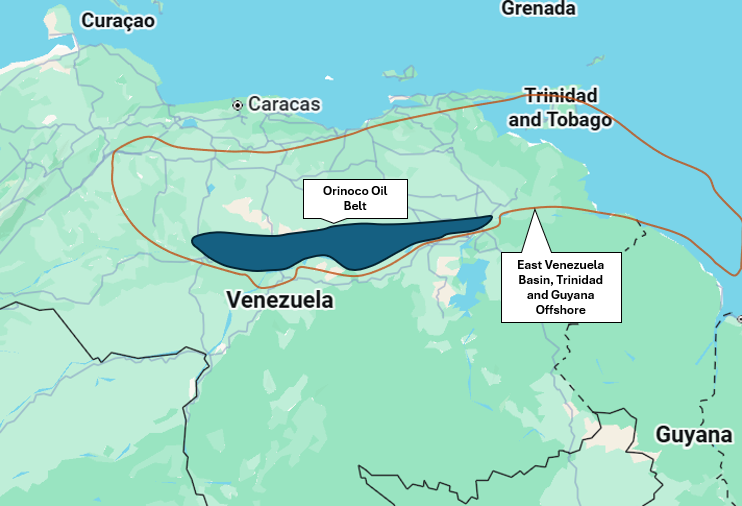
Venezuela produces heavy oil primarily from the Orinoco Oil Belt. This heavy oil requires special methods for production, transportation, and refining. In particular, diluent — a lighter hydrocarbon such as naphtha, condensate, or light crude — must be mixed with heavy oil to reduce its viscosity and allow it to flow. In addition, Venezuelan heavy oil production largely requires steam injection to heat and extract oil from the reservoir. Steam generation, in turn, requires natural gas or oil-based fuel. This raises the question: how is Venezuela addressing these challenges?
Where Does the Diluent Come From?
Most of the oil Venezuela produced during its peak production period (1995–1998) came from conventional fields, such as those in the Maracaibo Basin and eastern Venezuela. These fields produced medium and light crude oils, which do not require diluent. Development of the Orinoco Oil Belt, which contains extra-heavy crude requiring dilution, began in earnest in the 2000s. Over time, Venezuela’s production balance shifted from medium and light crudes toward heavy and extra-heavy grades.
Venezuela does not produce sufficient quantities of light hydrocarbons of the required quality for diluent and therefore must import these light hydrocarbons by tanker. According to Incorrys estimates, Venezuela needs to import at least over 0.06of diluent to maintain current level of heavy oil production in Orinoco Belt, which is currently above 0.5 MMBbl/d. The simplest source would be refineries on the U.S. Gulf Coast. However, due to U.S. sanctions, only Chevron is currently allowed to supply U.S.-sourced diluent under a special license for its projects in the Orinoco Oil Belt. As a result of sanctions, Venezuela imports diluent from other countries, including Iran, Russia, China, and Spain.
Venezuela also produces light crude in Monagas State in eastern Venezuela. This crude is used as a diluent for heavy oil; however, domestic light-oil production is insufficient to meet current or expanded diluent demand without imports.
Problems with Steam Generation
Steam generation for heavy oil reservoirs requires natural gas or fuel oil. Fuel for steam generation comes from several sources:
- Venezuela’s domestic natural gas production, which is relatively small compared to its oil production
- Imported natural gas from Colombia via the Trans-Caribbean Pipeline
- Associated gas produced from light and medium oil fields, which is currently mostly flared due to a lack of infrastructure for capture and processing
- Fuel oil used in heavy oil fields where natural gas is unavailable
If heavy oil production is to increase, new gas fields must be developed, and new infrastructure must be built at significant cost. Steam-generation infrastructure—including steam generators (boilers), gas pipelines to heavy oil fields, and associated gas-handling facilities—will also require substantial upgrades.
Conclusions
If sanctions on diluent imports are lifted, this would remove one of the key constraints on Venezuela’s ability to increase oil production.
However, scaling up Venezuelan oil production will also require significant investment in gas production, gas transportation, and steam-generation infrastructure.
Based on Incorrys’s assessment, limitations in gas supply and steam-generation capacity will represent a critical bottleneck to future Venezuelan heavy oil production growth.
See Also:
Full-Cycle Cost of Venezuelan Oil
References
“Venezuela: Additional Tracking Could Aid Treasury’s Efforts to Mitigate Any Adverse Impacts U.S. Sanctions Might Have on Humanitarian Assistance.”, United States Government Accountability Office, February 2021, https://www.gao.gov/assets/720/712253.pdf
Mogollon, Mery, “Venezuela Data: June oil production rises to 908,000 b/d.”, SP Global, June 2024, https://www.spglobal.com/energy/en/news-research/latest-news/crude-oil/062824-venezuela-data-june-oil-production-rises-to-908000-bd.
“Venezuela – Chevron supplied 49,000 b/d of diluents to improve Venezuelan crude.”, CNHE, March 26, 2025, https://cbhe.org.bo/index.php/noticias/71302-venezuela-chevron-suministro-49-000-b-d-en-diluyentes-para-mejorar-el-crudo-venezolano
“Venezuela.”, U.S. Energy Information Administration, February 8, 2024, https://www.eia.gov/international/analysis/country/VEN